









Still thinking of assignment help & grades? Book your assignment now & secure higher grades! Call us +91-9872003804

Expert Essay Writing Services

Get Expert Essay Writing Service with Value Assignment Help 

If you need a dependable, affordable, high-quality essay writing service that is 100% free of plagiarism and AI, you have come to the right place. Crafting top academic essays is an excellent way to succeed in your educational journey. However, if you're balancing multiple assignments, a job, college life, and work stress, an essay writing s .....

Get a short spoken summary of Expert Essay Writing Services.
Voice reading isn't supported in this browser.

What our experts taught this month

Real assignments, real student questions, answered by our academic experts.

Subject: Academic writing Services
Country: New zealand Quality Expected: excellent

Case: Argumentative and Persuasive Essay (New Zealand)

Solution: A student in New Zealand needed help with an argumentative and persuasive essay. Our expert explained building a clear claim, supporting it with evidence, addressing counter-arguments and using persuasive techniques ethically. The expert explained how to choose strong evidence, structure paragraphs persuasively and write a powerful conclusion. Feedback on the draft strengthened weak arguments and improved logical flow. The student submitted a convincing, well-structured essay.

A. Kumari Expert: A. Kumari

Talk to expert

Get Expert Essay Writing Service with Value Assignment Help 

If you need a dependable, affordable, high-quality essay writing service that is 100% free of plagiarism and AI, you have come to the right place. Crafting top academic essays is an excellent way to succeed in your educational journey. However, if you're balancing multiple assignments, a job, college life, and work stress, an essay writing service from Value Assignment Help can produce an exceptional essay for you. At Value Assignment Help, we have a team of well-qualified, creative, and expert writers. We provide school and college students with amazing essay writing help that motivates them to ace their academics. If you, too, are in search of a helping hand to make your educational journey smoother, trust our reliable services and ensure you get a human-reviewed essay every time you order. Benefit from fast delivery and well-researched data to help your essay be original and stand out as one of the best.

How Do Our Essay Writing Services Work? 

Our services are convenient and super easy to use. Students just have to follow a few simple steps, and they get to avail amazing opportunities to excel in their academics. 

  • Step 1 - Visit our website valueassignemtnhelp.com and get help from our student support helpline to place your order. 
  • Step 2 - Fill out an order form and detail all your essay requirements, such as topic, word count, and guidelines, more carefully. Once you request “Write my essay,” we pace ourselves to complete your essay as you want. 
  • Step 3 - Pick your essay writer from a panel of many expert professionals. 
  • Step 4 - Make a secure payment for your order and start the writing process. 
  • Step 5 - Once your essay is complete, we deliver it to you via your registered email. You can check and review the work. We offer free revisions before your final submission. 

Why is Our Online Essay Writing Service Best for You?

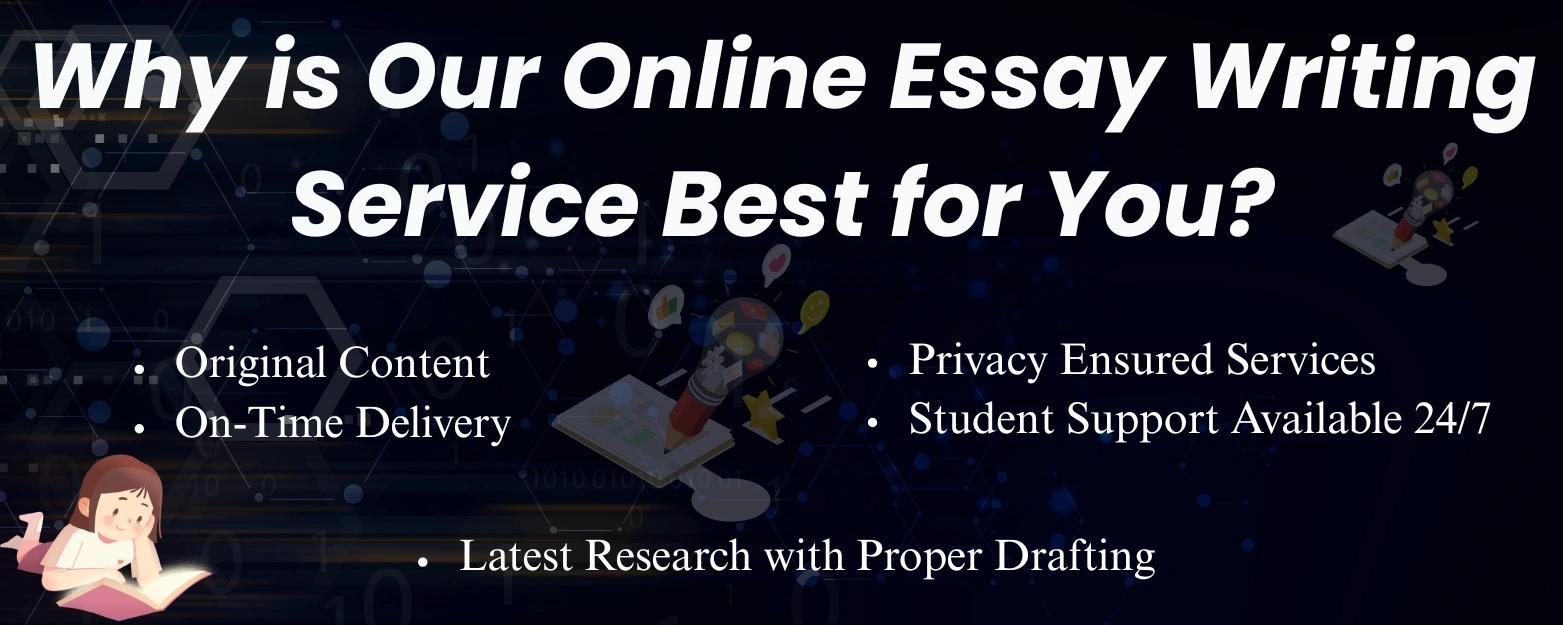
Students need a service that is affordable, reliable, and quick. These are our prime features, which are completed without any compromise. We offer students endless benefits and support their academics 24/7. Our dedicated team assists students in completing their assignments and learning with experts. 

Original Content - Originality is the most important feature of every essay. Your work needs to be unique and crafted according to your academic requirements. Our expert writers understand this the best. Our professional essay writers make sure to keep your essays reliable when you ask them for help in writing an essay for your academics. Our team has strong writing skills, ensuring your content is always free of AI-generated content, plagiarism-free, and original.

On-Time Delivery - Students worry most about deadlines. It causes more stress to students who are struggling without any paper help. This is why students need the most help with writing an essay for submission. Our essay writers are reliable and punctual. They manage to research fresh and frame the best essays for students according to their essay submission deadlines every time. 

Student Support Available 24/7 - We are available 24/7, so students don’t have to worry about getting help with papers. Students can place their orders whenever they get time and still avail themselves of our best services. We don’t leave students on their own and also help them with their queries and issues until they are satisfied with their delivered essays. 

Privacy Ensured Services - We understand that the confidentiality of students’ personal information is very important. We ensure that all users can share their personal details with us without any worries. We do not share any data provided by users to any third-party application. Our privacy policies are strong and ensure student details are maintained in confidence.

Latest Research with Proper Drafting - Students often need assistance in drafting their essays and making them impactful. Our writers provide professional essay-writing services. They are well-knowledgeable about different writing styles and help students to draft their essays as they like. Our custom writing services are immaculate, leaving students impressed with each order.
online essay writing services

Our Most Requested Essay Writing Services!

As one of the most reliable essay writing services, we ensure we have the inclusivity of every essay assistance a student might need. It means students can approach us without worrying about their essay requests. We help them with almost every essay request, which allows them to complete their academic journey smoothly. 

  1. Descriptive Essays Writing Service: Descriptive essays focus on describing any topic. It includes events, objects, places, and personal details in vivid language. Such essays aim to catch readers’ attention and help them paint a picture of the topic with their imagination. Students need a strong writing style to craft such essays that captivate readers.
  2. Persuasive Essays Writing Service: Persuasive essays are those essays that aim to convince the reader to believe in the topic and share the same viewpoint as the writer.  Here, students need to present research analysis and evidence to support their views and provide clear reasoning for the readers to agree with. Only well-researched essays with compelling writing can make the essays credible. 
  3. Narrative Essays Writing Service: Narrative Essays are designed to share or narrate any topic in a creative writing style. The reader must understand the topic's significance and resonate with the writer. Skilled writers help you craft essays in compelling language to convey information to the reader and share it in engaging writing.  
  4. Expository Essays Writing Service: Expository essays are essays written to explain the topic in easy and understandable language. It helps to inform the reader about any analysis or report with facts and data as reasoning. Students must find the latest data to support their logic and compile their research in a well-structured manner so readers can easily understand the topic.

Students get stressed if their schedules get stuffed. They have to focus on multiple subjects at once and complete them as efficiently as possible for the best grades. With reliable help services, they make their academics enjoyable. When students book their essays with us, we assign them to the best essay writers and get their essays completed and submitted on time.  Students might feel that they cannot receive well-structured essays on short notice, but it is super easy when we help you out. We get multiple deadline queries like, Can I write a 4-page paper in 2 hours or Can I pay someone to write my paper? Our answer is always yes!  
Essay Assignment Help

Expert Help With Multiple Services

With Value Assignment Help, students appoint professional essay writers who are ready with their essay writing services. It can be any essay format or custom essays; we feel excited about every work. We have 4000+ experts and 3000+ professional college essay writers who help students with essay writing. We also have expertise in research paper writing services, case study writing, dissertation, and thesis writing. For the past nine years, we have been providing services in various countries, including India, Australia, the USA, Canada, the UK, New Zealand, and more.  

If you too need professional experts to guide you and help you complete your assignments, just ask, “Do my paper for me,” and enjoy reliable and affordable essay writing services online and get help with your academics any time.

Latest queries of Essay Writing:

What is the standard structure of a UK academic essay?

In the UK, the secondary structure of an academic essay follows the 10/80/10 rule: an introduction taking up 10%, the main body 80%, and a conclusion taking 10%.

What is the most common referencing style in the UK?

The most common referencing style in the UK is harvard referencing style. It is widely accepted by many universities, colleges, and academic institutions in the UK, mainly in subjects such as business, education, health, and management.

What are the requirements to write an essay?

To write an essay, one should include features like clarity, conciseness, a strong thesis statement, and a well-structured outline. This ensures that readers get a clear vision of the given topic and can easily understand it. The essay should be structured starting with an introduction, followed by a body and conclusion.

What are some current topics in India to write an essay on? 

Some current topics in India on which students can write an essay include AI and its use in the education field, the current economic situation in India, Political parties and their theories, and the climate situation in India. 

What is the minimum number of words to write an essay?

The minimum word count for an essay ranges from 300-650 words, which can extend to the length of around 1500 words for an academic paper. 

Can you write essays for my School, college, and university?

Absolutely! We offer essay writing help for any academic level (i.e., high school, undergraduate, postgraduate, and even MBA or PhD-level writing). Each paper we write is structured to support your specific level of study, which includes the academic depth and language level required by your institution.

Can I get help with literature reviews or reflective essays as well?

Yes, we help with any kind of essay, including literature reviews, reflective essays, critical analysis essays, and comparative essays. Our experts have decades of knowledge on writing such essays, and they extract all the information from credible sources only, keep an academic tone, and know how to follow assessment rubrics.

Can I ask for help with citations and bibliography?
ctations style

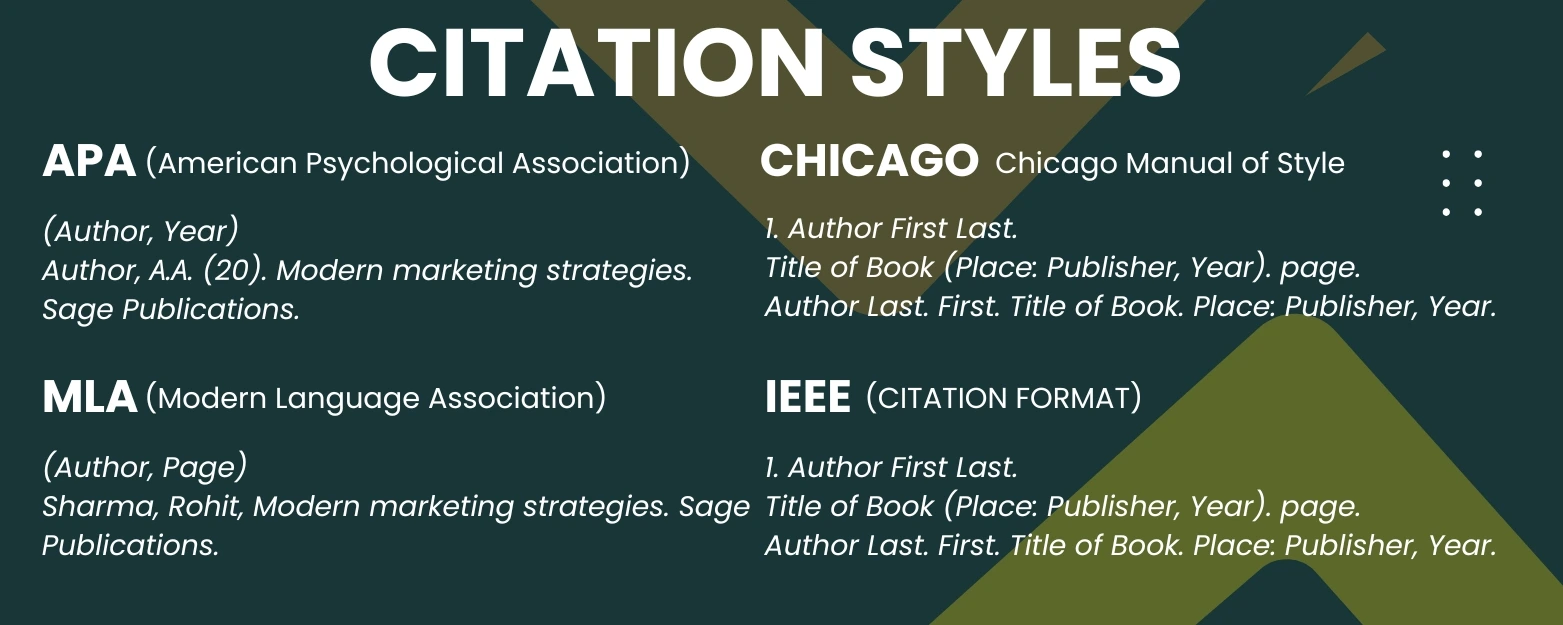
Yes! Every essay we deliver includes accurate in-text citations and a properly formatted bibliography or reference list. We support multiple citation styles, for example:-  

  1. APA
  2. MLA
  3. Harvard
  4. Chicago
  5. IEEE

Using such reference styles depends on your university’s requirements.

Can I pay in installments for large or semester-long essay help?

At Value Assignment Help, we are one of those rare writing services that offer flexible payment options. If you think you are tight on your budget, then you can just pay 50% amount to initiate your assignment, and the rest of the money can be paid before the delivery of your assignment; no need to pay 100% in advance!

Can I speak directly with the writer for clarification or instructions?

You cannot speak directly with experts to protect your privacy, but you can always communicate with our 24/7 support team, who will assist you with any clarifications, doubts, or queries you have. If you have any specific needs, we will forward them to the relevant expert and try to resolve the issue immediately.

Mukti Sharma

About the Author:

Mukti Sharma

Mukti Sharma is Editor-in-Chief for Engineering, IT, Graphic Designing, and the Diploma department at Value Assignment Help, with 6+ years of experience in academic content and editorial strategy. She oversees editorial quality and content direction across specialised technical and creative domains, driven by a belief that a student's potential should never be limited by location or background. At VAH, she ensures every piece of academic content meets rigorous quality standards while staying genuinely useful to the students it serves.

Frequently Asked Questions (FAQs)

Yes — that is what legitimate proofreading means: correcting spelling, grammar, punctuation, consistency and referencing format, and pointing out unclear sentences, while leaving your ideas, argument and structure unchanged. Many universities set limits: Waikato, for example, says proofreading must be limited to grammar, spelling and style and must not add new content, and UK universities commonly publish proofreading policies that forbid rewriting arguments. Ask for tracked changes and comments so you approve every edit and can show your original. If you need help with argument or structure, that is feedback or tutoring, not proofreading — check your course rules on what is allowed. Allow one to two days before submission.

Use a claim–counter–rebuttal structure. State your claim, present the strongest opposing view fairly with evidence (“Critics argue that minimum-wage rises reduce employment (Author, year)”), then respond: show its limits, use stronger or more recent evidence, or concede part of it and explain why your position still holds. Place counterarguments either within each body paragraph or in a dedicated section before the conclusion. Choose the strongest opposing argument, not a weak one that is easy to knock down — markers notice. Signal it clearly with phrases such as “however”, “an alternative view is” and “while this has merit”. Counterarguments raise marks because they show critical thinking and balanced use of evidence.

Add depth, not words. Ways to add genuine content: deepen analysis in each paragraph (explain why and so what); add evaluation — strengths, limitations and conditions under which a point holds; include a counterargument and rebuttal; add a specific example or case for each main point; compare two sources that disagree; and address a part of the question you skimmed. Re-read the rubric for criteria you have not covered. Avoid repetition, long quotations and filler phrases (“in today's society”), which markers notice. Most universities allow about ±10% on the word count, but check your rule — some penalise falling short as well as going over.

Organise by idea, not by author. Summarising: “Smith (2020) found X. Jones (2021) found Y.” Synthesising: “Studies agree that X improves outcomes (Smith, 2020; Jones, 2021), although Lee (2022) found the effect disappears in small firms, suggesting firm size moderates the relationship.” Method: build a synthesis matrix — themes as columns, sources as rows — and note each source's findings under each theme. Then write a paragraph per theme covering agreement, disagreement, possible reasons (method, context, date) and your judgement. Signal synthesis with phrases such as “similarly”, “in contrast”, “taken together” and “this suggests”. This is the single biggest step from a pass to a credit or distinction in literature-based work.

Choose criteria first, then a structure. Pick three or four meaningful criteria for comparison (for example, for two leadership theories: assumptions, evidence base, application and limitations). Then choose a structure: point-by-point (each paragraph compares both subjects on one criterion), which is usually stronger for analysis; or block (all of subject A, then all of subject B), which suits short essays but risks becoming two descriptions. Your thesis should make an argument about the comparison (“Although both models aim to explain motivation, expectancy theory is more useful for designing reward systems because…”). Use comparative language: “whereas”, “similarly”, “unlike”, “to a greater extent”. Conclude with your judgement, not a recap.

A reflective essay connects personal experience to theory and shows learning. Choose a specific experience related to your course; describe it briefly; then analyse it with a reflective model (Gibbs, Kolb, Driscoll, Rolfe or Schön's reflection-in-action) and with subject theory and evidence. Explore why things happened, your assumptions and feelings, and alternatives. Finish with what you learned and a concrete action plan. Write in the first person (“I noticed”, “I realised”) but keep academic language and citations. Common mistakes: too much description, no theory, and vague conclusions (“I learned a lot”). Most marks come from analysis and evidence of changed thinking.

A thesis statement is your answer to the question in one or two sentences, placed at the end of your introduction. It should be arguable (someone could disagree), specific (names the key factors) and give a map of your reasons. Weak: “This essay will discuss remote work.” Strong: “Remote work increases productivity for knowledge workers only when organisations redesign performance management, because trust-based goals, asynchronous communication and manager training address the coordination costs that otherwise cancel out the gains.” Test it: does each body paragraph support one part of it? Draft it early, then revise it after writing, since your argument often sharpens as you go.

In about 10% of the word count, do four things. Hook with context: one or two sentences showing why the topic matters now, ideally with a specific fact or trend (avoid “since the dawn of time”). Define key terms or scope if they are contested. Give your thesis: your answer to the question. Provide a roadmap: the order of your main points (“This essay first examines…, then…, before…”). Avoid long background, quotations to open with, and promises you do not keep. Write the introduction last, or revise it last, so it matches what the essay actually argues. Some disciplines discourage the roadmap sentence, so follow your lecturer's guidance.

A reliable starting point: introduction about 10%, body about 80%, conclusion about 10%. For a 2,000-word essay, that is roughly 200 words, 1,600 words and 200 words, with the body split into four or five paragraphs of 300–400 words, one per main point. Then adjust to the rubric: if one criterion carries 40% of the marks, give that section about 40% of the body. Plan word budgets per section before writing and track them as you go. Reports and dissertations divide differently — use the section weightings in your brief or handbook. Most universities allow about ±10%, but check whether headings, quotations and references count.

Use PEEL or a similar pattern. Point: a topic sentence making one claim that supports your thesis. Evidence: a source, data or example, cited. Explain: analyse the evidence — why it supports the point, what it shows and its limits. Link: connect back to the thesis or forward to the next paragraph. Variations such as PEEEL add evaluation, which markers reward: does the evidence fully support the point, and under what conditions? Keep one main idea per paragraph, usually 150–300 words in university essays. Avoid paragraphs that start with a quotation or end with evidence and no explanation. Read just your topic sentences in order — they should outline your argument.

Focus on the areas that cost international students the most marks. 1) Structure: clear topic sentences and PEEL paragraphs make your argument easy to follow even if the language is simple. 2) Paraphrasing: write from notes, not from the source text, to avoid patchwriting, which can look like plagiarism. 3) Academic vocabulary: the Academic Phrasebank (University of Manchester) gives phrases for introducing, comparing and concluding. 4) Hedging: use “suggests” and “may” instead of absolute claims. 5) Grammar patterns: articles, verb tenses for reporting research, and sentence length. Use your university's language and learning centre, read model essays in your discipline, and ask for feedback focused on one or two patterns at a time.

Separate thinking from writing. 1) Write your answer to the essay question in one sentence — that is your thesis. 2) List every reason that supports it, then group them into three or four main points. 3) Order the points logically (most important first, chronological or problem → cause → solution). 4) For each point, note the evidence and one counterargument. 5) Turn the plan into topic sentences — reading them in order should read like a summary of your argument. Then write. Reverse-outlining helps if you already have a messy draft: write one line summarising each paragraph, then reorder, merge or cut until the logic flows.

“Too descriptive” means you reported what sources say without judging them. Fixes: after each piece of evidence, add analysis (why it matters, how it supports your argument) and evaluation (how strong it is, its limits and when it would not apply). Compare sources — who agrees, who disagrees and why. Question the methods: sample size, context, date and bias. Use critical verbs and phrases: “this suggests”, “however”, “this is limited by”, “a more convincing explanation is”. Keep background and definitions short. University guides consistently list “too descriptive” among the most common feedback comments, and the remedy is the same: more “so what?” and “how far?” in every paragraph.

Critical analysis means examining ideas, evidence and arguments to judge their quality and significance, rather than accepting or repeating them. In practice: break the topic into parts and examine how they relate; ask how the evidence was produced and whether it is reliable; consider alternative explanations or viewpoints; identify assumptions and limitations; and reach your own reasoned judgement. It does not mean being negative — recognising strengths is part of it. A quick test for any paragraph: does it contain your judgement, supported by a reason? If it only contains information from sources, it is description. Use the verbs in your brief (analyse, evaluate, critically discuss) as cues for how much judgement is expected.

Change register, not just vocabulary. Replace contractions (don't → do not) and phrasal verbs (look into → investigate, find out → discover). Remove conversational phrases (“basically”, “a lot of”, “really”) and rhetorical questions. Use precise terms from your discipline. Prefer objective framing — “the evidence suggests” rather than “I think” — unless the task is reflective. Hedge claims appropriately (“may”, “appears to”). Write in complete, varied sentences and avoid slang or colloquialisms. Cite sources for claims instead of generalisations (“everyone knows”). Reading published articles in your field and noting their phrasing is one of the fastest ways to absorb academic style.

Use a five-part checklist. Question: does every paragraph answer the actual question and the rubric criteria? Argument: is the thesis clear in the introduction and supported in each topic sentence, with a conclusion that answers the question? Evidence: are claims supported by credible, recent sources, with page numbers for quotations? Referencing: does every in-text citation match the reference list, in the correct style? Presentation: word count within limits, required format (font, spacing, title page or cover sheet), headings if needed, spelling and grammar checked, and the file named as instructed. Read it aloud once — it catches errors spellcheck misses. Keep your drafts and notes as evidence of your process.

Introduction (about 10%): context showing why the topic matters; definitions or scope if needed; your thesis; and a brief roadmap of the main points. Conclusion (about 10%): restate the thesis in fresh words, showing how the argument has proved it; synthesise the main points (how they fit together, not a list); and state the significance — implications, recommendations or questions for future research. Never introduce new evidence in the conclusion. A strong conclusion answers the question more fully than the introduction did, because the reader now has the evidence. Phrases such as “taken together” or “this analysis demonstrates” help you synthesise rather than repeat.

Because academic cultures value different things. Many UK, Australian, New Zealand and US universities expect a direct thesis early, explicit signposting, critical evaluation of sources (including well-known authors), your own argued position and strict referencing — even for ideas you paraphrase. Some other systems value comprehensive coverage, respect for authority, indirect argument or reproducing textbook knowledge. Neither is wrong, but your marker grades against local expectations. To adjust: read your rubric's top-band descriptors, study model answers your lecturer provides, use your university's academic skills workshops, and ask for feedback on one specific skill at a time, such as critique or paraphrasing.

Chat with us on WhatsApp