









Here's a number worth sitting with before you panic about your own dissertation: a landmark Council of Graduate Schools study that tracked close to 49,000 doctoral students across 30 US institutions found that only around 56% had completed their programme within ten years of starting. Now put that next to the other end of the process: an analysis of 26,076 UK viva outcomes spanning 14 universities found that 96% of candidates who actually sit their viva pass it, most with only minor corrections.
Read those two numbers together and the real story isn't "dissertations are impossibly hard to pass." It's that the danger zone is the middle, not the end. Students who make it to submission overwhelmingly get through. The ones who don't finish rarely fail a viva, they stall somewhere in the eighteen months before it, usually for one of three reasons the research keeps surfacing: a methodology they can't yet justify under questioning, a supervisor relationship that isn't producing usable feedback, and simply never having seen what "good" looks like at their level before being marked against it.
That's the actual problem we solve — not "writing dissertations," but closing those three specific gaps. A methodology chapter that survives cross-examination, structured feedback on a schedule your supervisor may not have time to offer, and sample chapters that show you the standard before you're judged against it. PhD-mentored help from topic selection to final defence, for UG, Master's and PhD students, without handing you a file to submit under your name. APA, Harvard, MLA, Chicago and more. Confidential. Unlimited revisions. Since 2009.
What is dissertation writing?
Dissertation writing is the process of producing an extended, original research document at the end of a UG, Masters or PhD degree. A standard dissertation runs eight sections — title page, abstract, introduction, literature review, methodology, data analysis, discussion, conclusion — and demonstrates your ability to research independently, not just summarise what's already known.
How long is a dissertation?
Your university sets the real number, so check your handbook first. As a general guide: undergraduate dissertations run 8,000–12,000 words, Master's dissertations (MBA, MSc, MA) run 15,000–25,000 words, and PhD dissertations run 40,000–80,000 words, occasionally more depending on discipline.
What is the difference between a thesis and a dissertation?
It depends which country you're in. In the UK, India and Australia, "thesis" means a PhD submission and "dissertation" means Master's or undergraduate. In the US, it's reversed — dissertation for PhD, thesis for Master's. Either way, both are extended, original-research documents proving independent scholarly work.
How much does dissertation writing help cost?
VAH pricing starts at $6/page for editing and proofreading, scaling up by academic level, word count, deadline and complexity — primary data collection or SPSS/NVivo analysis costs more than a straightforward edit. Every quote is itemised and sent free, before you pay anything.
How long does it take to write a dissertation?
Undergraduate dissertations typically take 3–4 months, Master's 4–6 months, PhD 2–4 years. With mentoring support, urgent turnarounds are possible: proposals in 48–72 hours, individual chapters in 5–7 days, full editing and proofreading in 7–15 days depending on word count.
Dissertation Writing Services You Can Actually Trust
Let's be upfront about what "dissertation help" means at Value Assignment Help, because the phrase gets used to mean two very different things. One version quietly hands you a finished file and tells you to put your name on it. We've never done that — and the data on how dissertations actually get marked down explains why that version doesn't even work on its own terms.
Look again at that UK viva breakdown: of the students who pass, the overwhelming majority — roughly 79% — are sent away with minor corrections, not a clean pass. Minor corrections aren't random. They're targeted: an examiner asks you to clarify why you chose a particular sampling method, tighten an argument in your discussion, or justify a claim you made in passing. Answering that well requires having actually made the decision yourself — which is precisely what a ghost-written chapter can't give you back eight months later in a room with two examiners. Research into why methodology chapters get flagged points to the same root cause over and over: not that the method was wrong, but that the student couldn't explain why it was the right one for their question. That's not a writing problem. It's a comprehension gap, and no amount of polished prose fixes it if the understanding underneath isn't yours.
A dissertation is the single biggest piece of work in your degree — your gateway to a graduate programme, a published paper, an industry role, or a government post that asks "tell us about your research." Undergraduate dissertations run 8,000–12,000 words. Master's run 15,000–25,000. PhD dissertations regularly cross 80,000 words — somewhere around 450 pages. There's no shortcut through work of that size that survives a single good follow-up question. What actually gets you through is understanding your topic, your methodology, your literature and your own argument well enough to defend it out loud, on the spot, months after you wrote it.
Since 2009, that's been the whole model: don't do it for them, help them do it themselves. Our PhD experts explain the rubric, walk you through structure, recommend the methodology that actually fits your research question and make sure you can justify it against the methodological literature, draft dedicated sample chapters so you can see the standard expected, and stay on the questions until you're confident enough to defend the rest alone. That's why our repeat-client rate sits at 95%: not because people depend on us, but because their supervisors approve the work, and their examiners don't catch them out.
What Goes Inside a Dissertation — The 9 Core Sections
Every dissertation, UG or PhD, follows the same skeleton. Universities rename the parts, but the components don't change:
1. Title Page & Abstract
Research title, your name, university, and a 250–300 word summary of the whole study.
2. Introduction
Research problem, questions, aims, objectives, scope.
3. Literature Review
Critical review of existing scholarship, theoretical framework, and where exactly the gap sits.
4. Research Methodology
Qualitative, quantitative or mixed methods; data collection instruments; sampling; ethical considerations.
5. Data Analysis / Findings
Results presented via SPSS, R, NVivo, STATA or thematic coding.
6. Discussion
What the findings actually mean against the literature you reviewed; answering your own research questions.
7. Conclusion & Recommendations
Your contribution to the field, honest limitations, and where future research should go next.
8. References & Appendices
Bibliography in your required style, plus supplementary material.
9. Editing and Proofreading
Expert quality check of your dissertation to score HD grades.
Stuck on one of these more than the others? Book a chapter-by-chapter consultation →
Services We Offer
Whether you need one chapter unstuck or end-to-end mentoring:
- Dissertation Topic Selection — 5 supervisor-ready, gap-in-the-literature topics matched to your discipline.
- Dissertation Proposal Writing — Clear research questions, methodology and timeline. 48–72 hour turnaround.
- Literature Review Writing — Argument-driven reviews synthesising 40–120 peer-reviewed sources, not just summarising them.
- Research Methodology Help — Choosing and defending the right method: qualitative, quantitative, mixed-methods, case study, action research.
- Data Collection & Analysis — SPSS, R, NVivo, STATA, Python, RevMan, Excel, AMOS, SmartPLS, with clean output tables and plain-English interpretation.
- Chapter-by-Chapter Writing Help — Draft the one chapter you're stuck on: introduction, lit review, methodology, findings, discussion.
- Dissertation Editing & Proofreading — Grammar, structure, argument flow, citation accuracy. Starts at $6/page.
- Plagiarism & AI-Detection Report — Free Turnitin + Copyleaks AI-detection report with every order.
- End-to-End Reference Management — Through EndNote, Zotero, and any tool recommended by your university.
- Viva / Defence Preparation — Mock viva sessions, likely-question banks, slide-deck review.
Dissertation Help by Academic Level
Not sure which level of help you actually need? Share your rubric — you'll get a chapter-by-chapter plan and a free quote in under 30 minutes.
Dissertation Help by Subject
4,000+ PhD experts across every discipline students actually write in:
Don't see yours? We cover 100+ disciplines. Ask us →
How Our Process Works — 7 Steps
Share your topic, rubric, word count and deadline on WhatsApp or email. You can also reach us directly on our contact numbers (UK / India / AUS).
Get a free custom quote and timeline in under 30 minutes. No upfront payment.
Approve and confirm — pick your delivery schedule, get matched with a PhD expert in your discipline.
Receive chapter-by-chapter drafts with real-time updates. Give feedback at every stage.
Free Turnitin + AI-detection report delivered with the final draft — every time.
Unlimited revisions until you, and your supervisor, are satisfied.
Confidential handover. Your files and identity stay private. NDAs available on request.
Every Referencing Style Your University Uses
In-text citations and a full bibliography included by default:
Using a niche in-house style? Send your university's guide and we'll format as per your specifications and formatting guidelines.
Data Analysis Support
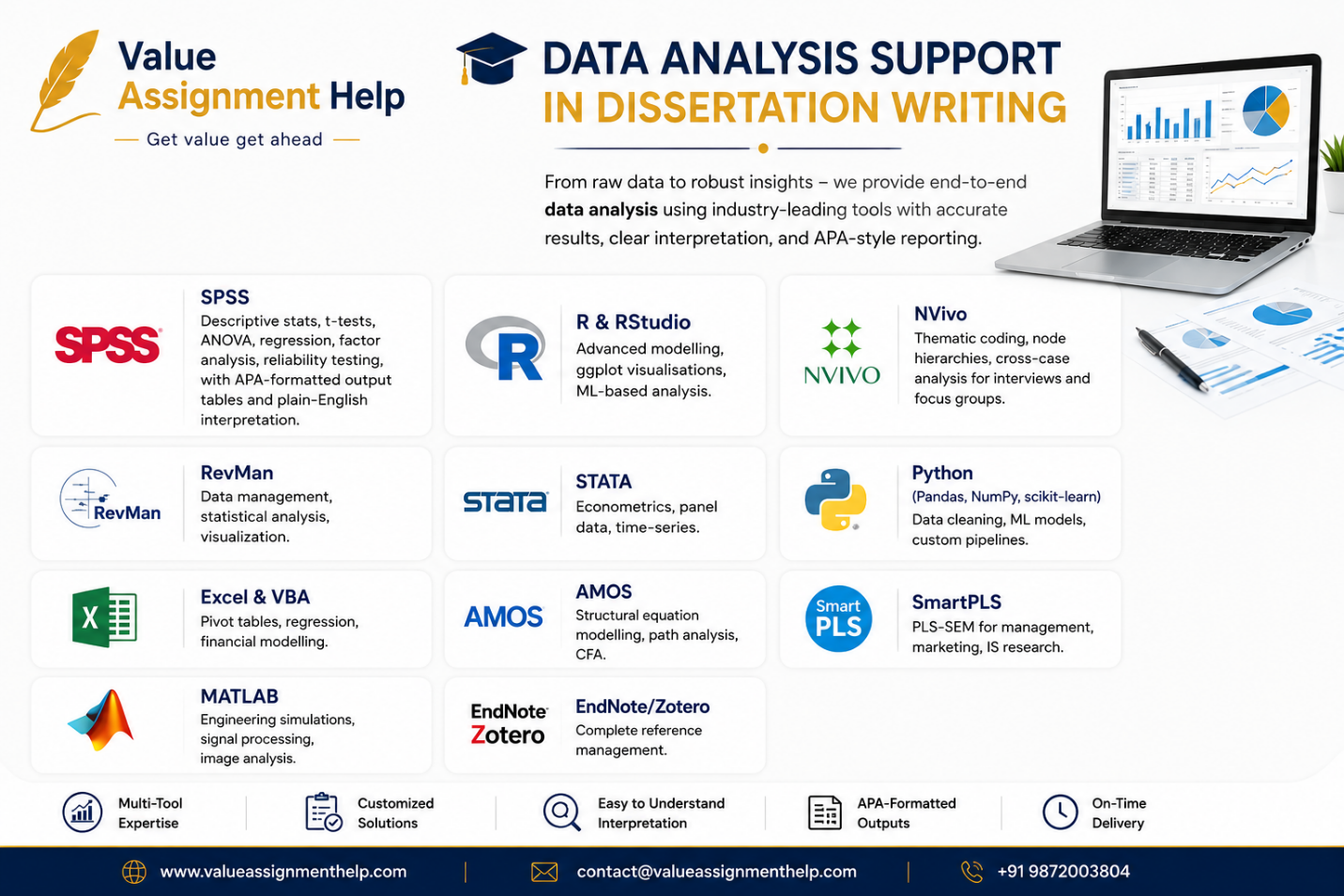
Our dissertation support handles data analysis end-to-end:
- SPSS — descriptive stats, t-tests, ANOVA, regression, factor analysis, reliability testing, with APA-formatted output tables and plain-English interpretation.
- R & RStudio — advanced modelling, ggplot visualisations, ML-based analysis.
- NVivo — thematic coding, node hierarchies, cross-case analysis for interviews and focus groups.
- RevMan — data management, statistical analysis, visualization.
- STATA — econometrics, panel data, time-series.
- Python (Pandas, NumPy, scikit-learn) — data cleaning, ML models, custom pipelines.
- Excel & VBA — pivot tables, regression, financial modelling.
- AMOS — structural equation modelling, path analysis, CFA.
- SmartPLS — PLS-SEM for management, marketing, IS research.
- MATLAB — engineering simulations, signal processing, image analysis.
- EndNote/Zotero — complete reference management.
Why 50,000+ Students Choose VAH
17+ Years, Since 2009
We've delivered dissertations for students at 300+ universities across nine countries. Not a fresh mill, a track record you can actually check.
95% Repeat Client Rate
Students come back because their supervisors approved the work, not because they're stuck with us.
Mentoring, Not Ghost-Writing
You leave every project able to explain your topic and defend your methodology out loud with our one-on-one mentoring and assistance.
PhD-Qualified Subject Specialists
4,000+ PhD experts matched to your discipline, not handed to a generalist who's never done research in your field.
Free Turnitin + AI-Detection Report
Every dissertation ships with a plagiarism report and a Copyleaks AI-detection report. No surprises at submission.
Unlimited Revisions Until Approval
We keep revising until you and your supervisor are both satisfied. It's on the invoice, not just the marketing page.
Pricing — Transparent, No Hidden Fees
The prices vary with deadline, complexity, type of research required, and your personal requirements. The prices above are tentative and subject to change. Kindly get in touch with our customer support and share your requirements to get a price quote specific to your needs.
Think this is too expensive?
Don't worry. Share your budget with the customer support. They will create a custom plan for you.
Get my custom quote →Recent Dissertation Samples
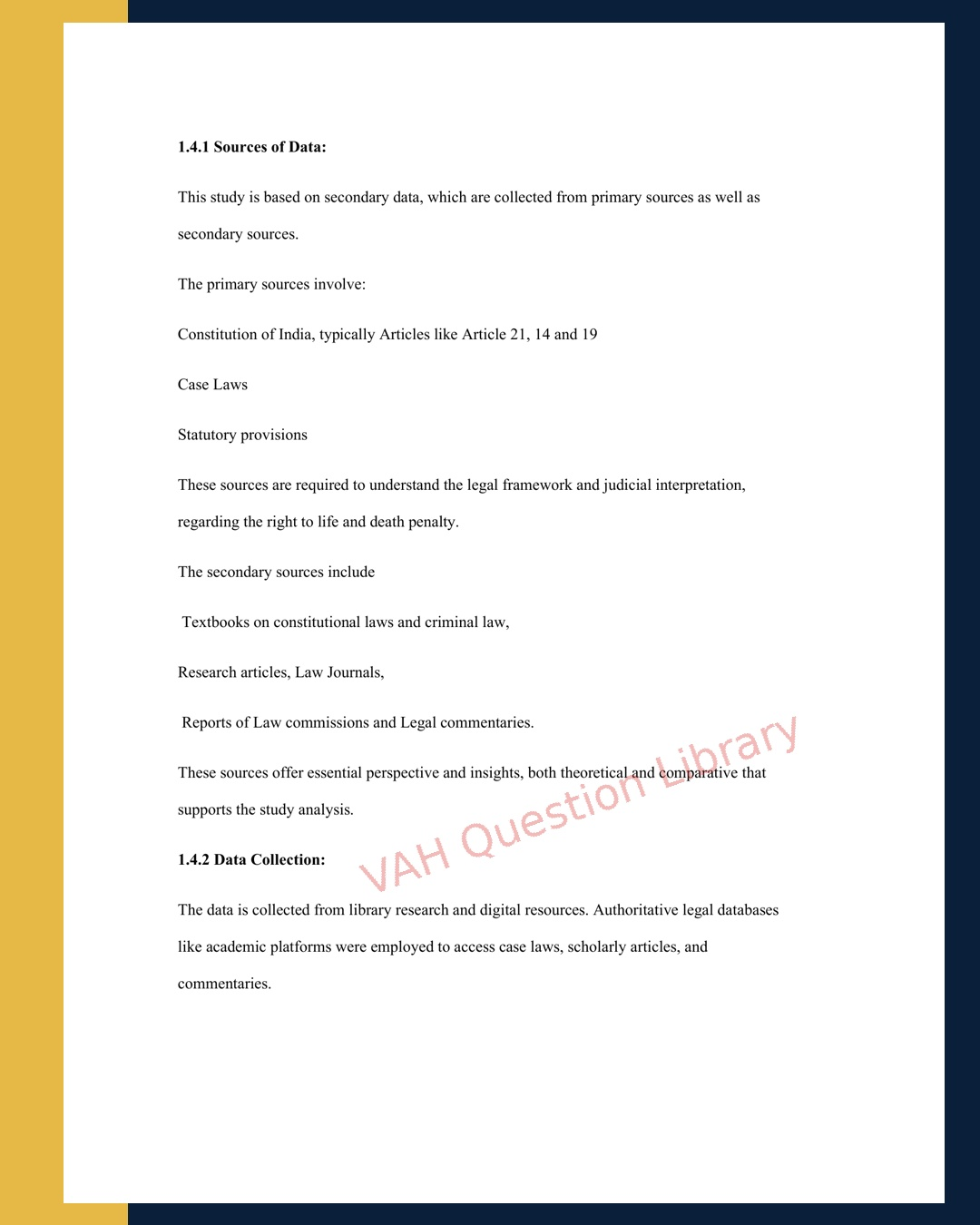
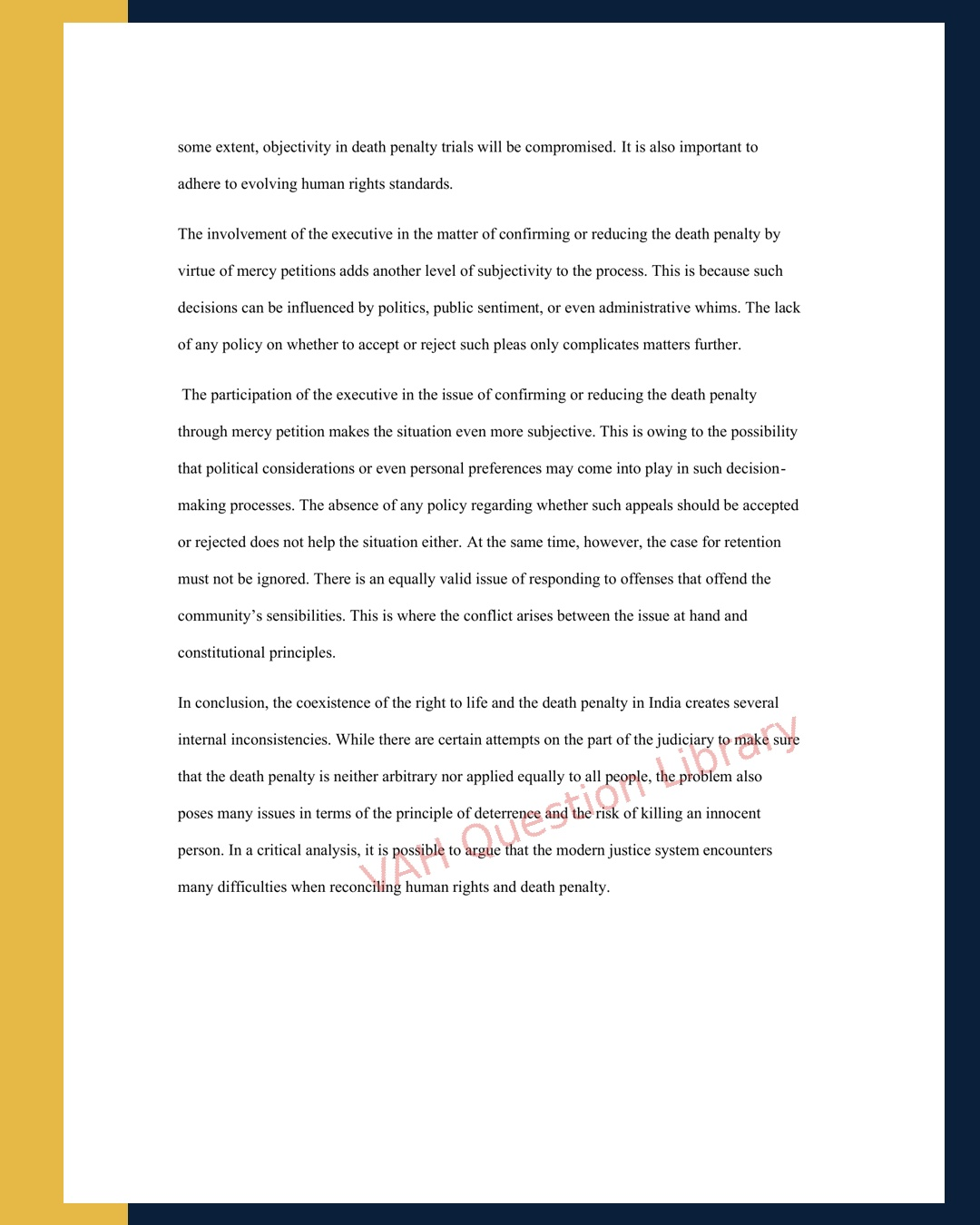
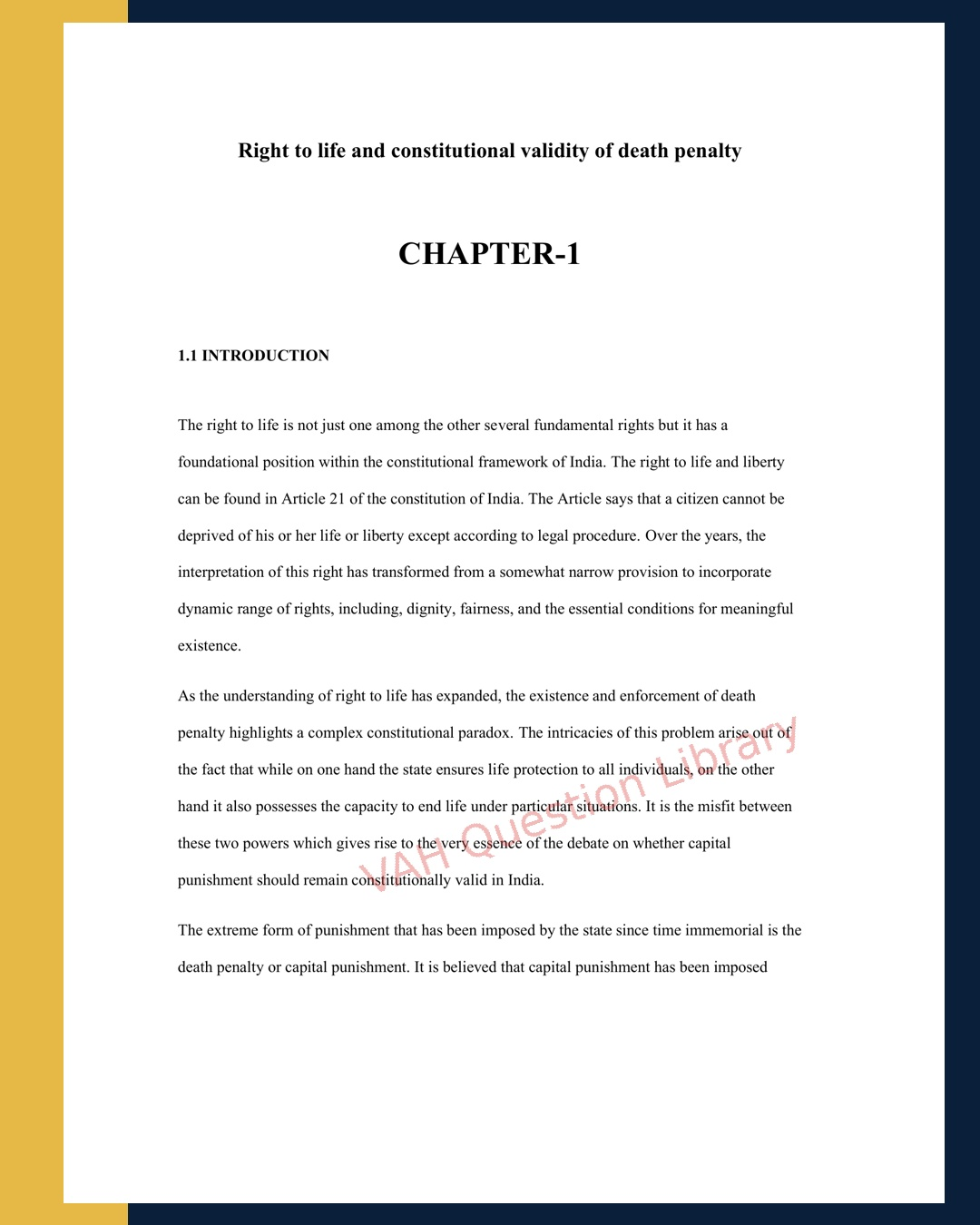
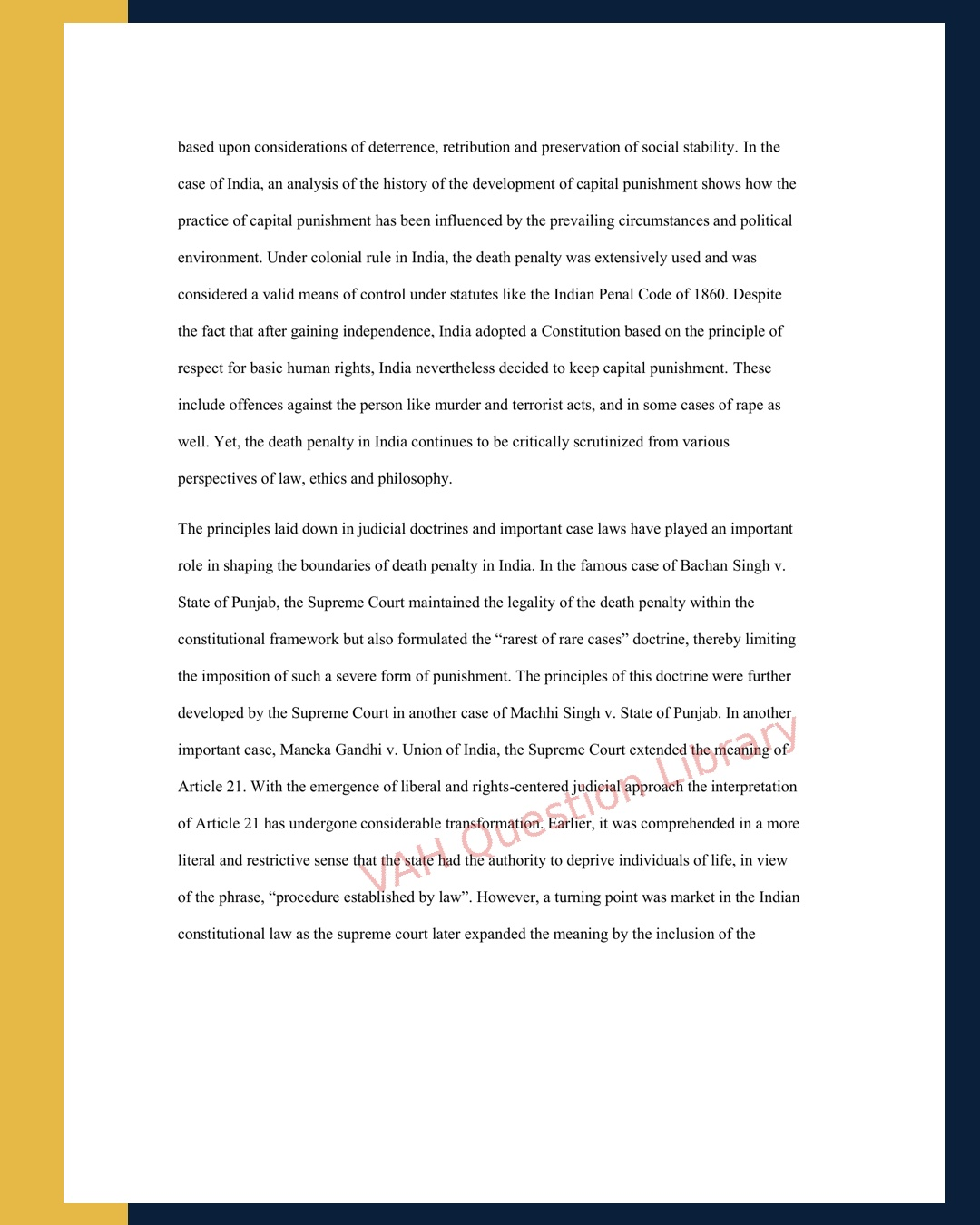
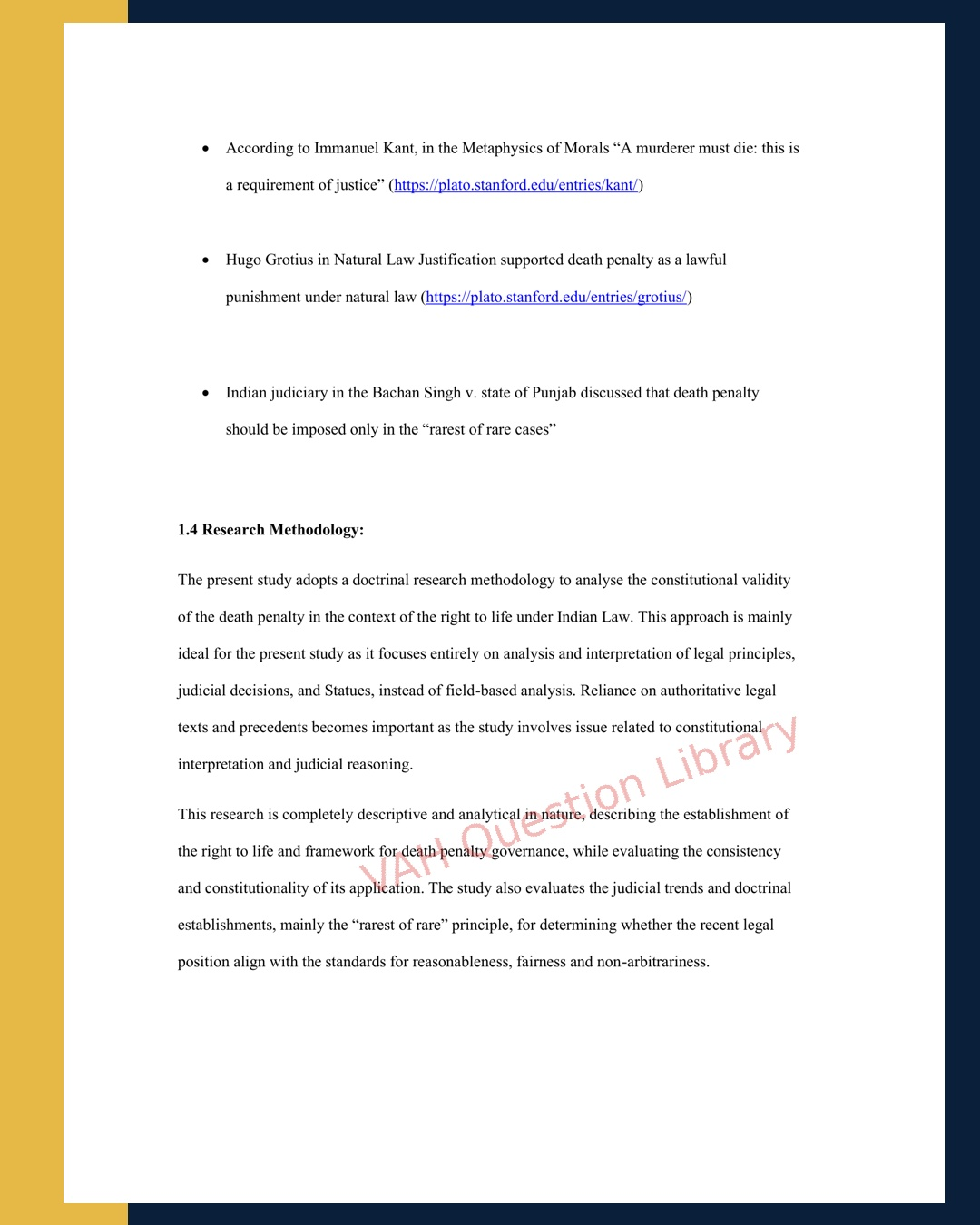
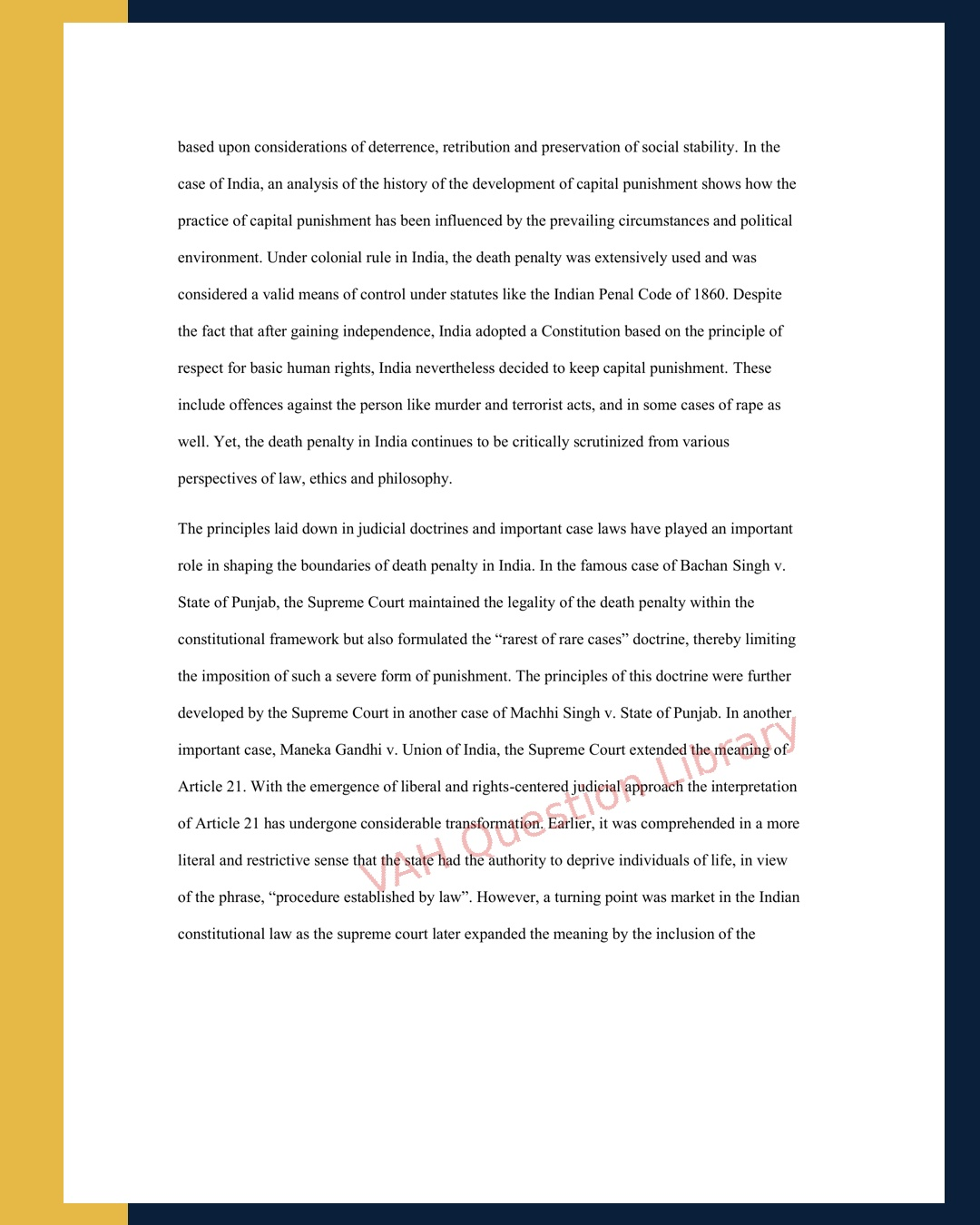
Constitutional Law — India | UG/PG Law | ~11,900 words | HD grade
Client requirement: The student needed a dissertation on one of Indian constitutional law's most debated tensions — the conflict between Article 21's guarantee of the right to life and the continued legal acceptance of capital punishment. The brief demanded a structured argument tracing judicial interpretation through landmark cases, engagement with international human rights positions, and a reasoned constitutional conclusion, in the formal tone and citation discipline law faculties require.
How we helped: We built the dissertation chapter by chapter, starting with the doctrinal foundation of Article 21's expansion through cases like Maneka Gandhi v. Union of India, then layered in the "rarest of rare" doctrine from Bachan Singh and Machhi Singh to show how judicial reasoning had narrowed the death penalty's scope over time. We connected this to global abolitionist trends and instruments like the ICCPR for comparative weight, while maintaining the precise legal terminology and citation standard required — resulting in an HD grade.
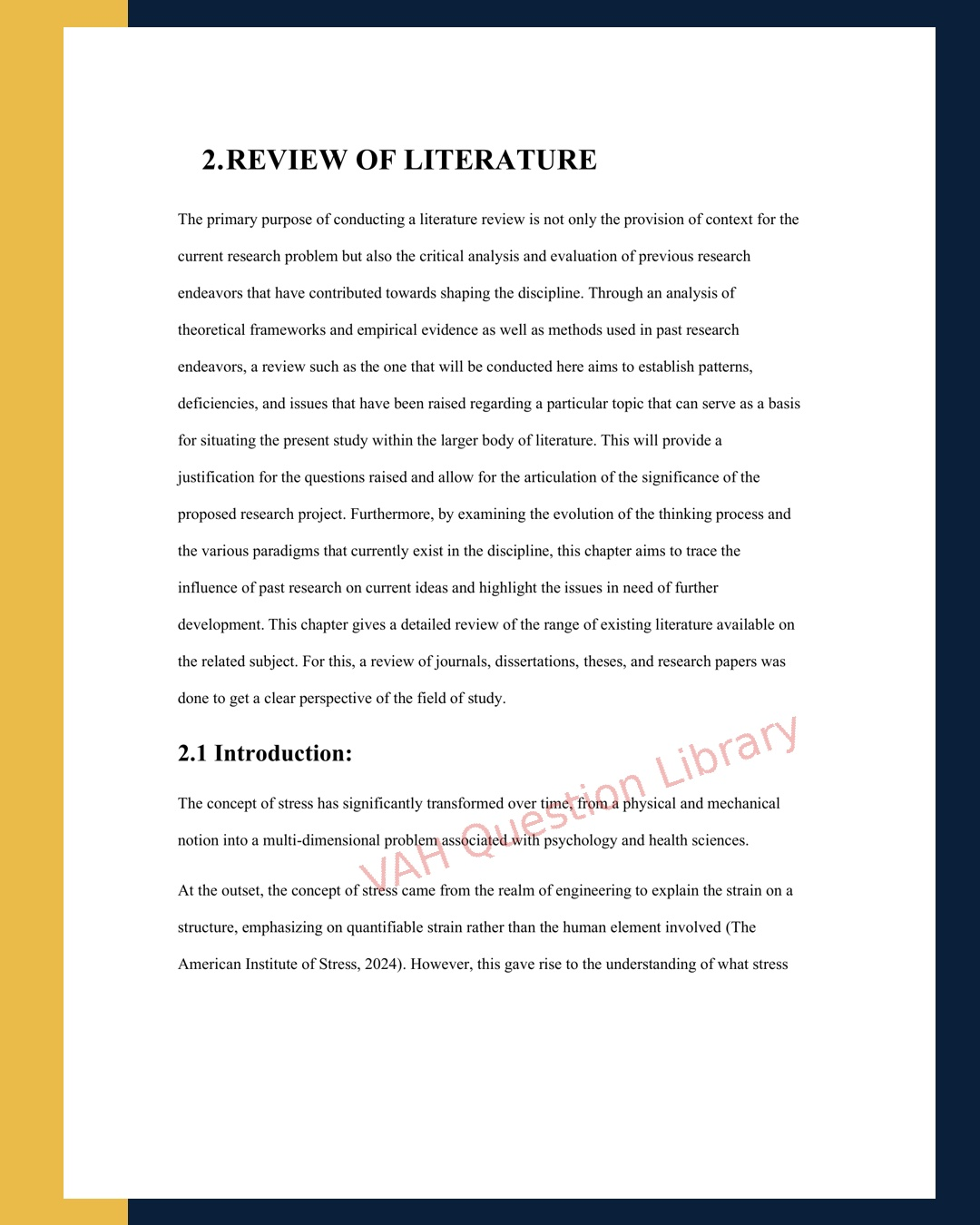
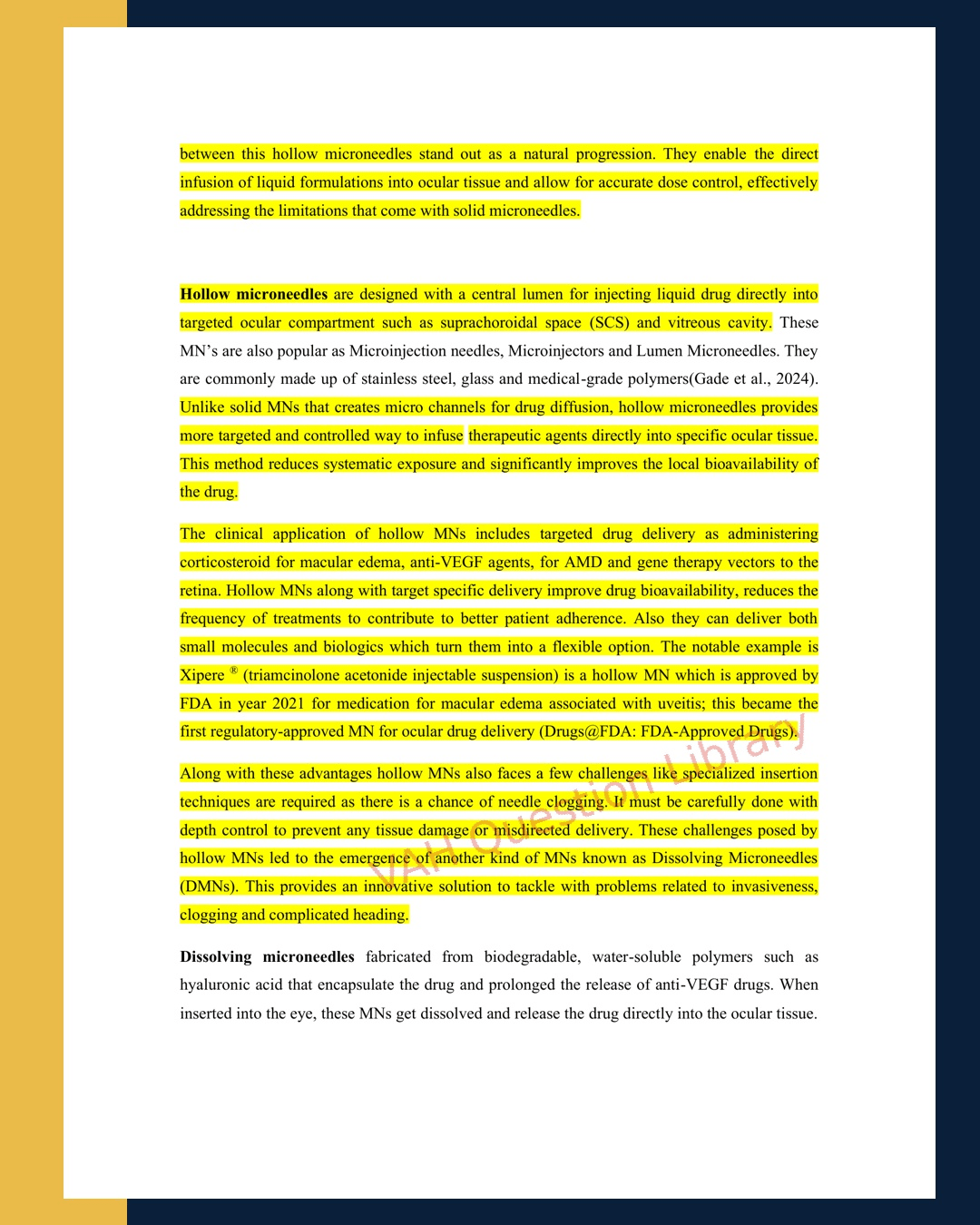
Psychology/Management — USA | PG | ~10,850 words | HD grade
Client requirement: This postgraduate client needed a full empirical dissertation, not just a literature-based argument. The scope required a proper research design: a literature review distinguishing general stress research from entrepreneur-specific studies, clearly defined hypotheses and sampling technique, real data collection and statistical analysis, and a discussion tying findings back to practical recommendations.
How we helped: We structured the entire empirical pipeline — research design, population and sample size justification, data collection tools, and reliability/validity testing — then carried it through to descriptive statistics, result interpretation, and a discussion section. The work closed with two sets of recommendations: one for entrepreneurs managing stress in practice, and one for future researchers, giving the client a defensible, end-to-end dissertation rather than a partial draft.
_1785496930.png "Dissertation Sample 15")
_1785496854.png "Dissertation Sample 14")
_1785496764.png "Dissertation Sample 13")
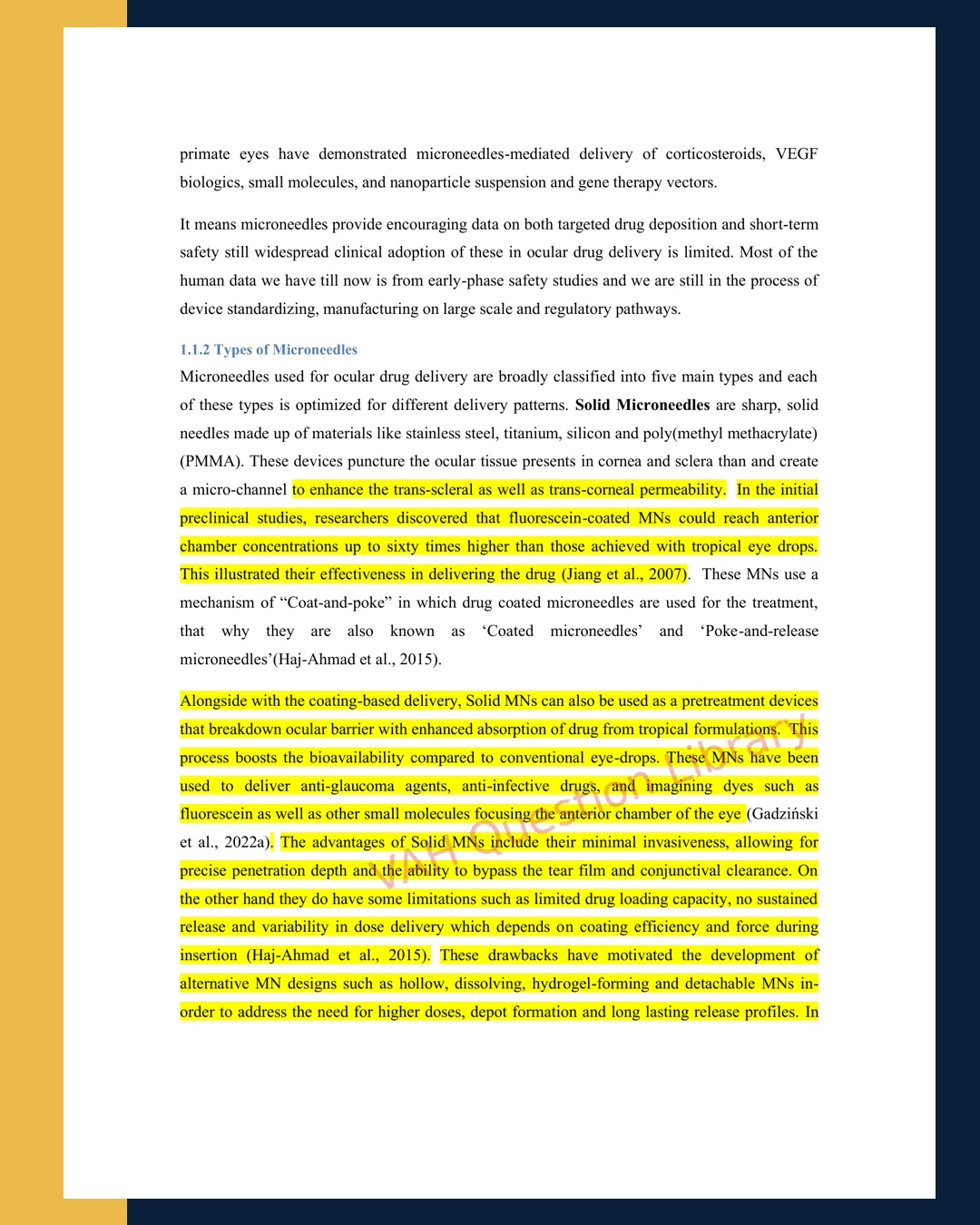
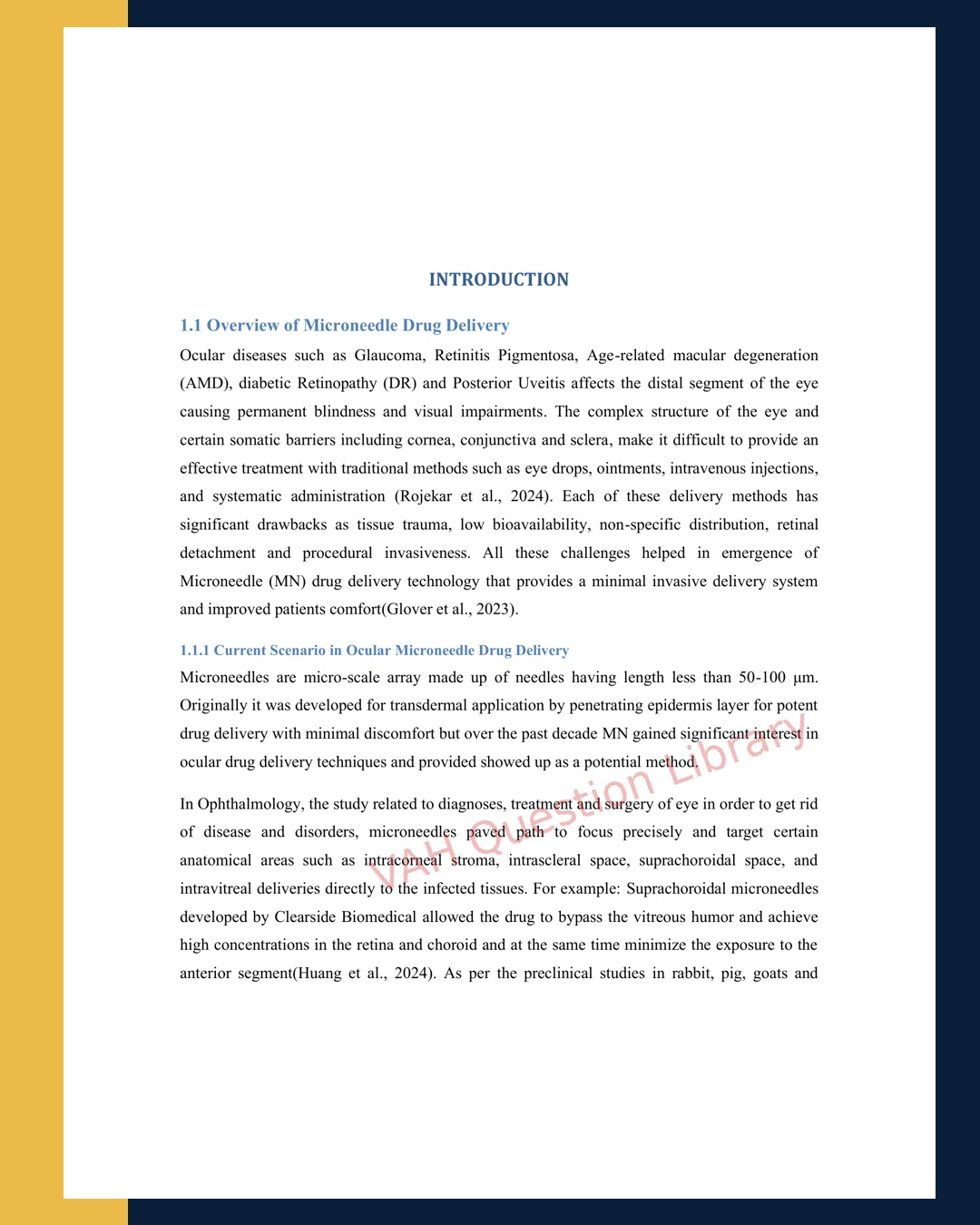
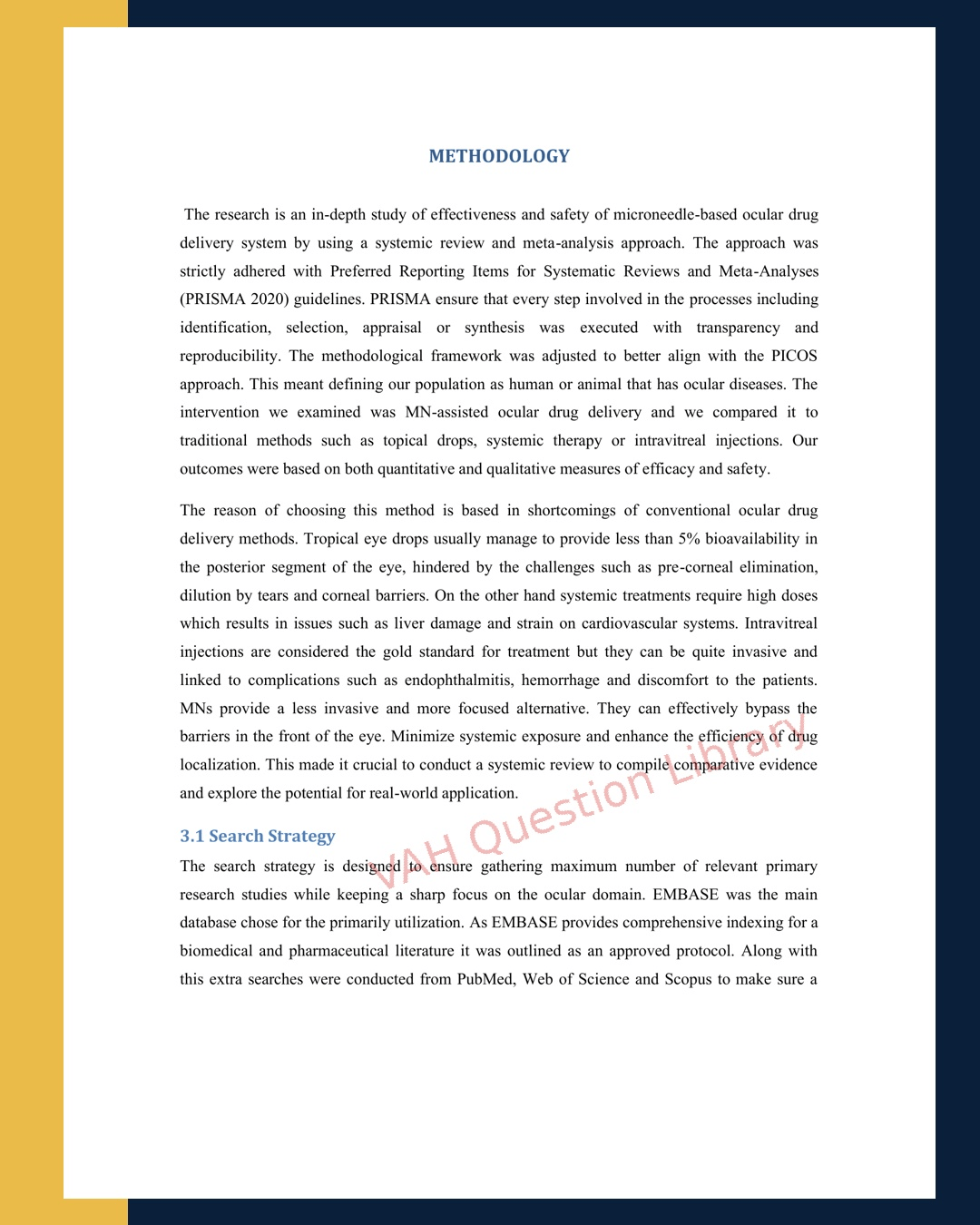
Biomedical Sciences — UK | Master's | ~12,850 words | HD grade
Client requirement: This MSc client needed a technically demanding systematic review and meta-analysis, a format governed by strict methodological rules rather than open argument. The university expected a defined search strategy, transparent inclusion/exclusion criteria, CASP-based quality appraisal, and a synthesis of efficacy and safety data across multiple trials, compared against established treatment methods.
How we helped: We built the thesis around the rigor a systematic review demands, covering the search strategy, study selection, and CASP-based quality appraisal, then synthesized quantitative efficacy indicators across the reviewed studies. We extended the discussion into translational potential, from preclinical work to human trials, industry landscape, and regulatory hurdles, delivering the technical, evidence-based precision Master's-level science dissertations require.
Every sample was submitted by a real VAH student. Names and personal details are anonymised. Confidentiality is protected under our standard NDA.
WHAT OUR STUDENTS SAY
_1785417128.png "OUR STUDENTS SAY")
_1785417184.png "OUR STUDENTS SAY")
How Does a Dissertation Differ From a Thesis?
One of the most common questions we get from students is surprisingly simple on the surface, yet it trips up even final-year scholars: "Is my final project a thesis or a dissertation?" The confusion isn't really the student's fault — universities across different countries use these two terms in completely opposite ways, so a definition that holds true in one part of the world can be entirely wrong in another. A student who has read guidance written for a US university ends up applying the wrong structure, technique, format, length, and research expectations to a project meant for a UK or Canadian institution, which can cost them marks. That's exactly why we've broken down the real, region-specific differences below:
| Aspect | Thesis | Dissertation |
|---|---|---|
| Regional usage | In the UK, India, and Australia, a thesis is the document required to earn a PhD or doctoral degree, representing the highest level of academic writing a student will produce. In the USA and Canada, the term flips — a thesis refers to the Master's-level document, submitted before students move on to doctoral study. | In the UK, India, and Australia, a dissertation is the document submitted at the undergraduate or Master's level, usually shorter and less research-intensive than a PhD thesis. In the USA and Canada, this term is reserved for the doctoral capstone, making it the most extensive and rigorous piece of academic writing a student will ever produce. |
| Purpose and academic expectation | A thesis is built around presenting an original argument, position, or interpretation using existing knowledge, theories, and secondary research. The core expectation is that the student demonstrates mastery of the subject and the ability to construct a well-reasoned, evidence-backed case rather than necessarily generating brand-new data. | A dissertation is expected to make an original contribution to the field, meaning the student must identify a genuine gap in existing research and fill it through primary research, experiments, or fieldwork. This makes it a much heavier undertaking, since the work must hold up to scrutiny as a new addition to academic knowledge. |
| Length, research depth, and process | Typically 20,000–80,000 words depending on country and academic level, and may or may not require original data since it can be argument-driven and based on secondary sources. Usually completed within a single semester to a year, guided by one supervisor, with a comparatively shorter defense process. | Length ranges widely — from around 8,000 words at the undergraduate level to well over 100,000 words for doctoral work — and almost always requires original primary data. Guided by a full committee of advisors, spans two to seven years at doctoral level, and concludes with an extensive viva voce before an examination panel, often followed by an expectation to publish in peer-reviewed journals. |
VAH Mentoring vs Assignment Mills — Why the Model Matters
| VAH Mentoring Model | Typical Assignment Mill | |
|---|---|---|
| What you receive | Sample chapters, edits, methodology guidance, one-on-one assistance in researching, drafting, writing, editing, and proofreading. | A ghost-written final dissertation file. |
| Learning Outcome | You understand your topic and can confidently defend it, supported by live doubt-clearing sessions. | Little or no understanding of the work. |
| Confidentiality | NDA available on request. | Rarely offered. |
| Revisions | Unlimited revisions (when included during onboarding). | Usually limited or charged separately. |
| Viva Readiness | High – you understand and can explain your research confidently. | Low – the work was not developed with your active involvement. |
Here's the honest version of why that distinction matters: a ghost-written dissertation may help with submission, but it doesn't prepare you for your viva. When examiners ask detailed questions about your methodology, literature review, or analysis, genuine understanding makes all the difference.
Dissertation Help vs Private Tutoring
| Dissertation Help (VAH) | Private Tutoring | |
|---|---|---|
| Scope | Full dissertation lifecycle including topic finalization, literature review, primary and secondary data collection, data analysis, multimodal analysis, reference management, sample drafting, editing and proofreading | General academic support |
| Deliverables | Sample chapters, edits, stats output, live assistance and practical guidance, primary and secondary research assistance | Verbal explanation only |
| Turnaround | Deadline-driven in multiple stages | Session-based |
| Cost | Starting from $6/page* | $30–80/hour |
*This is a tentative price, and might vary based on your actual dissertation requirements. Get in touch with us for actual cost breakdown.
Stuck on Your Dissertation? Here's How We Help
"My dissertation deadline is tomorrow."
24-hour emergency help is available. WhatsApp us your rubric and current draft — we'll assign an expert within the hour and deliver chapter-by-chapter, so you have something strong to submit even under a brutal clock. Note that urgent deadlines under 72 hours carry urgency charges.
"I can't finish my dissertation."
Talk to a PhD mentor for 30 minutes. We'll map your remaining chapters against your deadline, break the project into weekly milestones, and take over the sections you're stuck on. Most "unfinishable" dissertations get back on track within a week.
"My supervisor isn't responding."
We understand that discussing every small doubt with your professor isn't feasible. Our mentors fill the supervision gap — reviewing your draft, flagging weak arguments, correcting methodology, giving you the structured feedback your supervisor should be giving. You keep the credit. We stay invisible.
"I don't know how to choose a topic."
We'll arrange a free 20-minute topic-brainstorm call with a mentor to help finalize your dissertation topic. You leave with 5 supervisor-ready, gap-in-the-literature topics tailored to your interests, plus a shortlist of 10 seed references for each — ready to discuss with your assessor.
"I'm stuck on methodology."
You're in good company — this is the single most commonly flagged chapter at correction stage, and the research on why is consistent: it's rarely that students pick the wrong method, it's that they describe it instead of defending it. "I used semi-structured interviews" tells an examiner nothing. Explaining why that method fits your specific research question, grounded in recognised methodology literature, is what turns a description into a defensible argument. Our specialists build methodology chapters that way: matched to your research question, anchored in methods theory (Creswell, Saunders, Bryman and equivalents in your field), with sampling justification, acknowledged limitations, and ethics-approval language that shows judgement rather than a template being filled in.
"I'm worried about plagiarism and AI detection."
This is one of the major concerns of every student who comes to us. When students choose cheap dissertation help, they either get a dissertation written by AI or a heavily plagiarised document. Every dissertation ships with a free Turnitin report and a Copyleaks AI-detection report. Our writers work from primary sources, not AI-generated drafts. What you submit is genuinely yours — and you can verify that before you submit it.
Dissertation Writing Help Wherever You Study
Nine countries, every dissertation matched to an expert who knows your university's style guide and grading rubric:
Studying somewhere not listed? Ask us →
About the :
Mukti Sharma
Mukti Sharma is Editor-in-Chief for Engineering, IT, Graphic Designing, and the Diploma department at Value Assignment Help, with 6+ years of experience in academic content and editorial strategy. She oversees editorial quality and content direction across specialised technical and creative domains, driven by a belief that a student's potential should never be limited by location or background. At VAH, she ensures every piece of academic content meets rigorous quality standards while staying genuinely useful to the students it serves.